Imagine winning a science competition and receiving a beautiful medal—only to discover that the inscription isn’t in English or Hindi, but in Sanskrit.
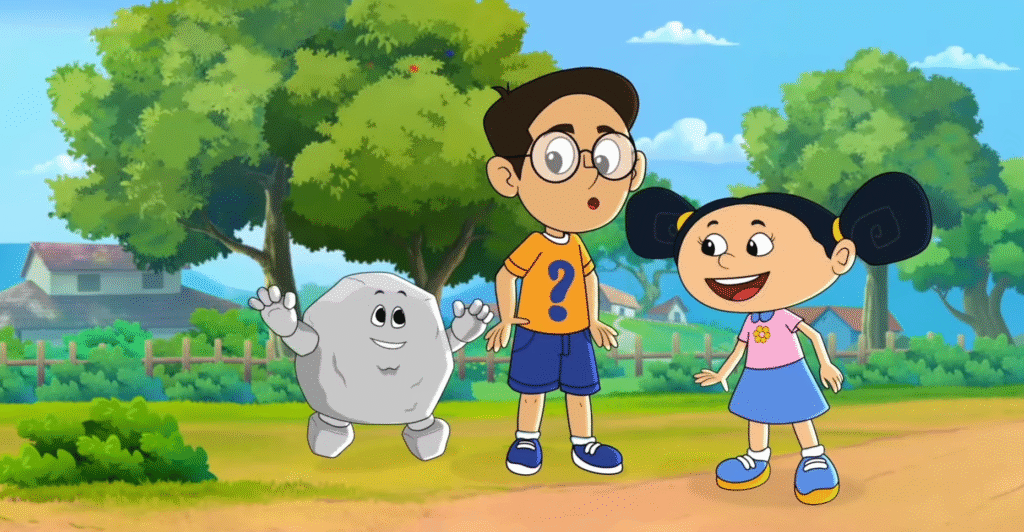
That is exactly what happens to Isha in Vedastram Episode 2. Her curiosity, along with Om and Ashma’s magical guidance, leads them into an incredible world of ancient books, timeless wisdom, and the fascinating story of one of humanity’s oldest languages.
Their journey reminds us that Sanskrit is much more than an ancient language—it is a gateway to knowledge, culture, science, and self-discovery.
A Journey That Begins with Curiosity
Every great discovery starts with a simple question.
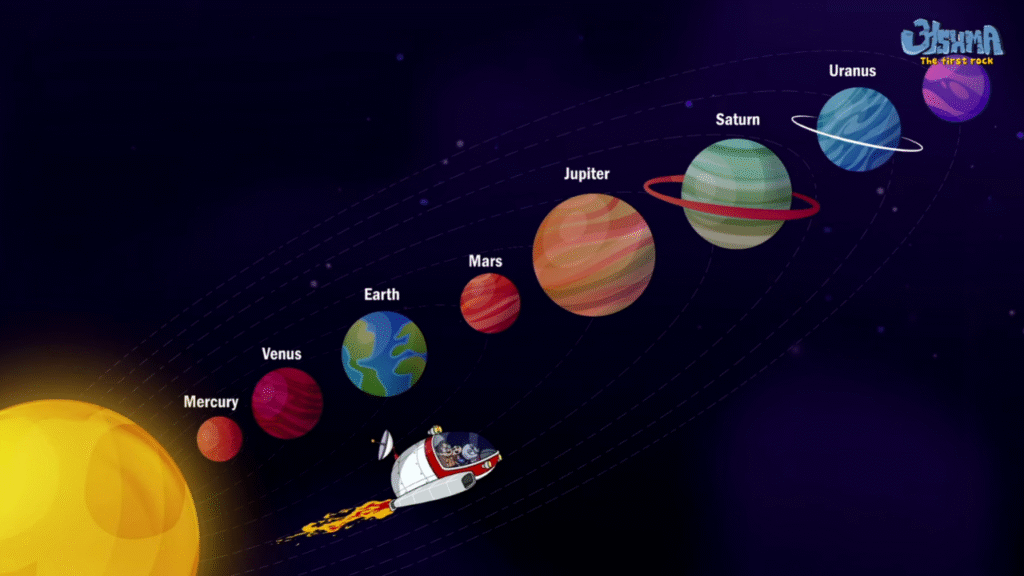
When Om notices that the words engraved on Isha’s medal are unfamiliar, the siblings decide to find the answer hidden inside an old book. What begins as curiosity soon transforms into an unforgettable adventure through a magical library where Sanskrit verses, ancient manuscripts, and timeless stories come alive.
This journey beautifully teaches children that asking questions is the first step toward learning.
Why is Sanskrit So Special?
Sanskrit is one of the world’s oldest documented languages, with a history spanning thousands of years.
Many of India’s most treasured texts—including the Vedas, Upanishads, Ramayana, Mahabharata, and Bhagavad Gita—were composed in Sanskrit. These works continue to inspire philosophy, literature, education, and spiritual thought across the globe.
What makes Sanskrit unique is its remarkable precision. Every sound follows clear pronunciation rules, making the language systematic and highly structured.
Sanskrit Is More Than a Religious Language
A common misconception is that Sanskrit is used only for prayers and rituals.
In reality, Sanskrit has preserved knowledge across numerous disciplines, including:
- Mathematics
- Astronomy
- Ayurveda
- Yoga
- Philosophy
- Literature
- Grammar
- Ethics
The episode beautifully explains that Sanskrit is not simply the language of the past—it is a language that continues to connect us with knowledge that remains relevant today.
The Science Behind Sanskrit
One of the most fascinating aspects highlighted in the episode is Sanskrit’s logical structure.
Its grammar follows highly organized linguistic rules, while every letter has a fixed pronunciation. Because of this consistency, Sanskrit has often been studied in the fields of linguistics and computational language processing.
Rather than memorizing words alone, learning Sanskrit encourages structured thinking and deeper language understanding.
A Timeless Message from the Bhagavad Gita
During their adventure, Om and Isha encounter a glowing verse from the Bhagavad Gita:
“Na hi jñānena sadṛśaṁ pavitram iha vidyate.”
(Bhagavad Gita 4.38)
Its message is simple yet profound:
There is nothing more purifying than true knowledge.
This becomes the heart of the episode. The medal is no longer just an award—it becomes a reminder that knowledge is life’s greatest achievement.
What Children Can Learn from This Story
The adventure leaves young viewers with valuable life lessons:
- Stay curious and keep asking questions.
- Books are gateways to incredible discoveries.
- Ancient wisdom still has relevance today.
- Learning different languages broadens our perspective.
- Knowledge is more valuable than any trophy.
These lessons make the episode entertaining while gently introducing children to India’s rich cultural heritage.
Why Sanskrit Still Matters Today
In today’s technology-driven world, Sanskrit continues to attract researchers, linguists, educators, and students.
Studying Sanskrit helps preserve India’s literary heritage while offering insights into language, philosophy, and history. It encourages analytical thinking and builds a deeper appreciation for one of the world’s oldest knowledge traditions.
Rather than belonging only to history, Sanskrit continues to inspire future generations to explore, question, and learn.
Final Thoughts
Vedastram Episode 2 reminds us that every question has the power to unlock a new world.
What began with a simple medal inscription became an unforgettable journey through knowledge, history, and culture. It teaches children that true success is not just about winning awards but about understanding the wisdom behind them.
As Ashma says, whenever there’s something you don’t understand, simply open a book—and let curiosity guide the way.
What is the importance of Sanskrit language?
The importance of Sanskrit language lies in its role as the foundation of many ancient Indian texts, scientific knowledge, philosophy, literature, and cultural traditions. It continues to inspire learning even today.
Why should children learn Sanskrit?
Learning Sanskrit helps children improve language skills, logical thinking, pronunciation, and their understanding of India’s rich cultural heritage.
Is Sanskrit only used for religious purposes?
No. Sanskrit has been used to document subjects such as mathematics, astronomy, medicine (Ayurveda), grammar, philosophy, literature, and yoga.
Why is Sanskrit considered a scientific language?
Sanskrit follows highly structured grammatical rules, consistent pronunciation, and precise sentence construction, making it one of the world’s most systematic languages.
What lesson does Vedastram Episode 2 teach?
The episode teaches that curiosity leads to knowledge, books are powerful sources of learning, and true achievement comes from understanding and wisdom rather than rewards alone.